Slowing Down Enough to See
There is something about early mornings that carries a different rhythm.
Before the noise begins, before the pace accelerates, there is space to think. It is in those slower moments that I am reminded why I photograph the way I do.
The same thing happens when I have a camera in my hand, and I am not rushing. When I am fully present. No split attention. No clock watching. Just me and the person in front of me.
There is a calm that arrives when you really slow down. A clarity. A sense that you are seeing properly rather than just looking. It feels almost like a sharpening of perception. Everything becomes clearer, yet you remain relaxed.
Psychologists call this state “flow.” Mihaly Csikszentmihalyi described it as the point where attention becomes effortless and time seems to fall away. That is when the stronger photographs appear.
Over time, I have learnt something simple.
I do not need to improve my location.
I need to improve my vision.
I need to improve my vision.
In the age of image sharing, photographers often seek out the same celebrated locations, standing in the same positions, chasing the same light. There are places in the world where tripod legs have worn grooves into the ground.
I remember standing on a ridge in the Lake District, carefully set up for the light I had planned. Within minutes, a coach arrived, and a group of tourists surrounded me, smiling and bowing apologetically as they photographed the same scene. One gentleman even set up his tripod between the legs of mine to capture the identical view from a slightly lower angle.
It was absurd. It was amusing. It was also revealing.
Location alone does not create depth.
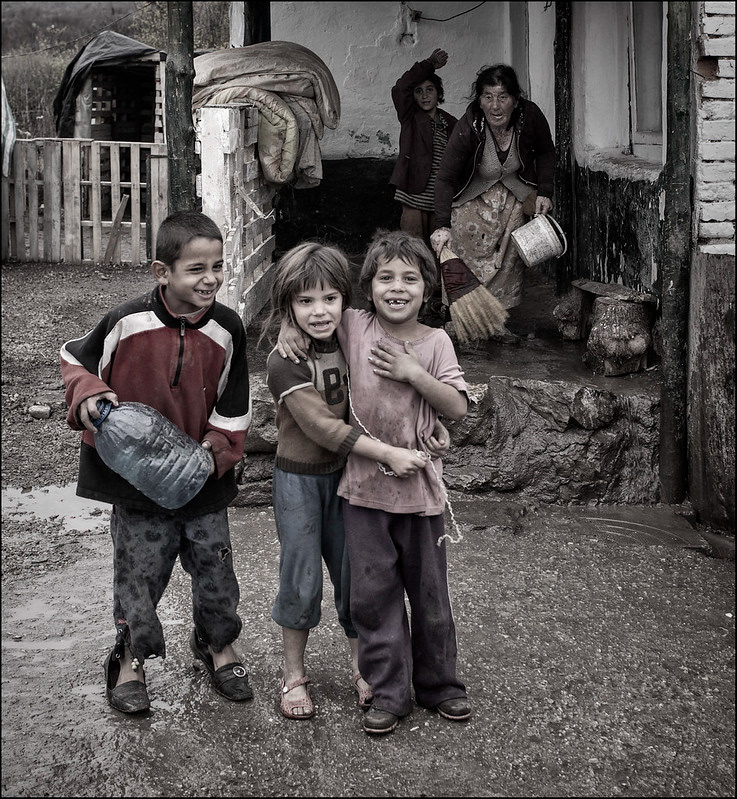
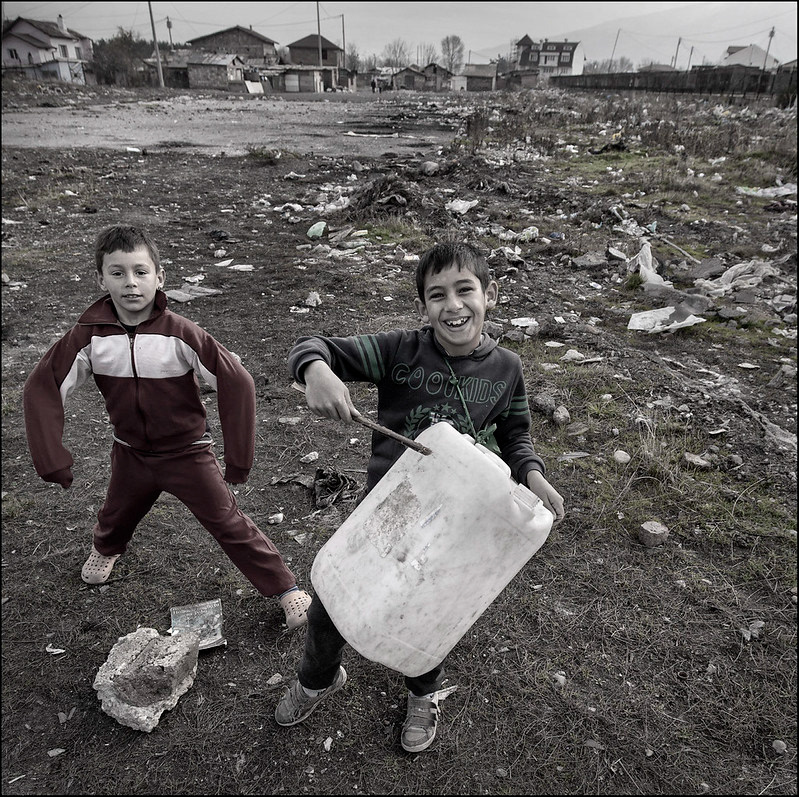
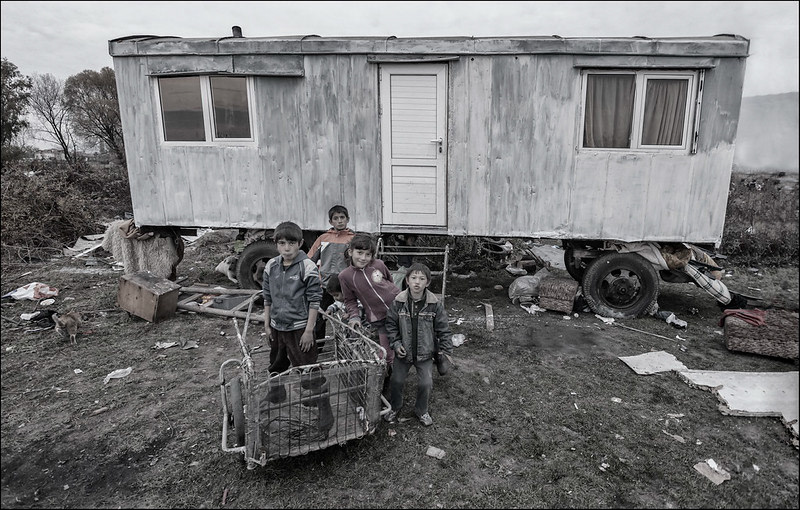
Some years later, I travelled to Bulgaria to photograph two Roma communities living in severe poverty. One was near Sofia, the other in the mountain village of Bretsnia. The living conditions were among the most difficult I have witnessed.
What stayed with me were not only the hardships, but the expressions. The laughter. The humour. The pride. The closeness of families. They lived and suffered conditions that most people would find hard to imagine. They suffered many tragedies, yet they had community and they smiled.
Conditions do not always dictate spirit.
That experience reinforced something fundamental. Compelling photographs are not created by dramatic settings. They are created by attention. By presence. By emotional engagement.
The question I often ask photographers when teaching workshops is simple:
What are you trying to say?
What are you trying to say?
An image that carries intention carries weight. Single photographs have altered public opinion and shifted the direction of nations.
The human brain processes images far faster than text. We respond instinctively before we analyse. That is part of photography’s power. It communicates directly.
This is also why I work primarily in monochrome.
Not because colour lacks beauty, but because black and white demand tonal discipline. Deep blacks. Clean highlights. Subtle gradations. Remove the tonal range, and an image becomes flat.
Communities are no different. They are layered. Varied. Full of contrast and character.
Modern life encourages speed. Social platforms reward immediacy. Yet depth rarely reveals itself at speed. It requires attention and time.
My work is rooted in that principle.
I do not need to improve my location.
I need to improve my vision. I need to stretch myself a little further each time.
I need to improve my vision. I need to stretch myself a little further each time.
That is why, with my latest project, 'It Takes A Town', I chose to photograph where I live. Why I return to familiar places. Why I focus on people rather than spectacle.
The work is not about novelty. It is about clarity.
One conversation at a time. One portrait at a time.